How to Get Kids to Do Their Homework

girl with books-01If it seems like you are always fussing at your child to get his or her homework done, it’s because you are always fussing at your child to get his or her homework done. There are more than 2000 school days in your child’s life, all of which seem to end with homework. Over time that means you need to inspire your children to do about 4000 hours of schoolwork at home, when friends and screens are calling their names.

I, of course, have a few suggestions on how to get that mountain of homework done with less argument and frustration:

First, establish the habit of homework long before they actually have any. When they are little, arrange time in the evening when the TV is turned off, activities are done, and you as a family can sit and read, build things, or play games that involve a little brain work. Do this during the two hours before bed and the kids will also sleep better.

Keep the goal in mind. What do kids gain from doing homework? We want them to learn the material, of course. More importantly, we want them to learn how to learn, and to love doing it. We want to furnish them with skills that will prove useful in real life. If homework can teach your children to examine facts, explore knowledge, organize and take personal responsibility for their work, and manage their time efficiently – what might he or she accomplish in life? These are the very skills that form a foundation for success.

Where to do it? Choose a place. There is no “right” place. If your child learns better in a quiet environment, a desk in his or her room would work well. If she needs a little supervision, the kitchen table might work better. Wherever you choose, turn off the TV, videogame, and cell phone (quiet music is usually fine, and sometimes can even help children concentrate). Make sure they are comfortable and the lighting is good. Have the supplies they need – pencils, paper, calendar, dictionary? – nearby. Get rid of any distractions.

When to do it? Pick a time. Again, there is no “right” time. Some kids will do better right after school; some will need to blow off steam and may do better after dinner. Choose the time that works best for your individual children, involving them in the decision. Then make this schedule a routine, because children’s brains accommodate habits well. Kids don’t argue over something they have done every day for years; they argue endlessly over change and unpredictability.

Give your children a warning a few minutes before their free time is ending, so they can finish whatever they are doing before you drag them away.

Order homework by subject. Start the hardest subjects first; position assignments which require memorization (spelling, math?) early and repeat after breaks.

Keep your expectations appropriate for your child’s age. As a general rule of thumb a child should have about 10 minutes of homework per grade level. Children in elementary school will need help organizing their work and staying on task; teenagers should be able to do their work without supervision. If all goes well, somewhere in middle school they learn to take responsibility.

Since you as parents won’t always be around to supervise, let your teenager fail in high school when they make poor choices. Summer school is cheaper and immensely less life altering than flunking out of college; repeating algebra is torture, but less traumatic than loosing a job.

Expect problems. Approach problems with diplomacy and respect for the person who is your child. Label the problem: “You get distracted by your cell phone.” Don’t label your child: never “You’re lazy.” Be willing to compromise with your child to solve the problem. “If you will turn off the cell phone while you do your work, you can have 5 minute breaks between subjects to catch up, call and text.” Agree to the compromise; it is a contract with your progeny. If you need to, write it down and both of you sign it. Read my blog on How to Fight with a Child.

Rewrite this contract when the first one flops, until you find an arrangement that enables your child to learn and you to not run screaming from the room.

Allow the child’s input as much as possible. Let him decorate his workspace up to the point where he puts in distractions. Let her decide subject order, as long as it works. Let them choose their break activity, up to a time limit.

Reward success. We as humans are hard wired to respond better to rewards than to punishment. How long would you go to work if you did not get a paycheck?

Sadly, it is not realistic to expect a better grade to be your child’s only reward. That grade is too far into the distant misty future, over a mountain of hard labor.

Rewards work best if they are small, and given for small increments of good behavior. A hug, a smile and pride in their accomplishment is all they need when they are small. When they are a little bigger, take time to read a book together or play a game. Keep rewards simple, small, and frequent.

Older children also need small, frequent rewards, though probably not as simple. They always have items that they want, but don’t need; these items make great rewards. Study time, completed homework and test grades can all earn them points toward a want. There is no need for an argument when he or she doesn’t do their work before picking up the phone; they just won’t get that essential point.

Homework is training for life. Choose the place and time, working with your child to fit it to your family routines, your child’s personality, and his or her age. Endeavor to teach self-discipline, time management and responsibility equally with reading, writing, and arithmetic. Reward success. Keep in mind that the goal is not to learn how to spell that list of words, but rather to inspire a love of learning which will propel your child to succeed, now and into the future.

DomesticatedMomster
The Blogger's Pit Stop

Che, Che, Che, Changes… and Children

Change- just aheadBack-to-school season is the perfect time to think about how change impacts children, how to help them through it, and the positives that come when kids learn to be flexible and resilient.
Humanity is naturally comfortable with routine. We are confident in our ability to get through the day when we have done it all before. We are secure, and safe. We don’t have to particularly think about anything. To varying degrees, we all like to know what to expect–whole books are written about it!

This need for routine and stability is far more pronounced in a child. A toddler has no real sense of time–they live in the moment, and the future is a complete unknown. Older kids may have a better sense of time, but surprises can still incite strong emotion. Teens have so many changes going on already that seemingly small transitions can make them feel overwhelmed and out of control.

Yet change is inevitable, and the pace of change increases every day.  Parents today change jobs and geography more than did any previous generation; divorce is more common; the 24 hour cycle flings news at us continuously from around the planet.

Improvements in technology and rapid changes in our cultures remake our world the minute we turn our backs. So…

How to help children cope with change:

  • Be a good example. If you take things in stride and don’t appear worried or scared, they will imitate your reaction.
  • Build strong relationships. If they know they are loved and secure, a move or loss will not be so overwhelming.
  • Stay Healthy. Eat nutritious food, exercise, and get enough sleep. Everything is easier to deal with if you feel good and are not tired.
  • Warn them that change is coming. Imagine if even something as wonderful as Christmas happened without advance warning. There’s a tree in the living room, Dad is dressed up in a crazy suit, everyone is excited, and all the normal routines are suspended. Scary stuff! Let them know what is coming, and give them time to process.
  • Explain what is happening, and why it is happening, at their developmental level. Answer their questions. Give them information about the changes that are coming, and explore the possibilities. Imagine the good things that could happen as a result of the change as well as the bad and scary stuff.
  • Keep to routines when you can. Morning regimens, family meals, and bedtime routines are the foundation of a good day. Nothing feels safer than snuggling up with someone who loves you and a bedtime story.
  • Allow them their feelings. Don’t discount them. If the thing they are angry about the most with Grandma’s death is that no one will give them Tootsie Rolls anymore, nod solemnly and say you understand.
  • Expect bad behavior. Kids will regress with transitions, and will act out if they feel insecure. Discipline them in exactly the same way you would have before the change, because if they get away with bad behavior it will heighten their anxiety. If they still get a time out for saying that bad word, then things must not be that different. Bad behavior successfully disciplined establishes new borders and validates their security.
  • Let them have an impact on the change. Let them choose some flowers for an event, or the color of their new room for a move. Humans feel better when they have done something, no matter how small. Action shrinks fear.
  • Carve out time every day for a little one-on-one. ‘Nuf said.
  • Allow time for relaxation and fun. Laugh. Listen to music. Renee Jain, MAPP has a few excellent mindfulness activities for children here. I especially like her practice of “dissolving a thought.” Kids can devolve into what is called catastrophic thinking and spiral downward into a place where nothing is right with the world, and nothing ever will be. Mindfulness practice can stop that spiral and bring them back into the moment.
  • Avoid activities that increase stress, like competitive sports or games. This is not the time to play Monopoly. Simplify your schedule, and let things go.

Change is inevitable; learning to deal with it is a necessary skill. Kids who can adapt to new situations are better at everything from learning vocabulary to making friends to succeeding in the workplace.  Being able to manage your emotional responce to change is part of being a grownup. Knowing when to accept change and when to insist that you have an impact creates a fulfilling life. Last, seeing the good that can come from a transition is how you grab an opportunity.

The ability to adapt is one of the things that made humans special since we first started using that opposable thumb. Encourage your kids to learn it.


Domesticated Momster


The Blogger's Pit Stop

Zika Virus: An Update

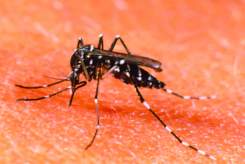
Aedes mosquito-01The Zika virus was first isolated from a Rhesus Macaque monkey in 1947 in the Zika Forest in Uganda (zika meaning “overgrown” in the Luganda language–gotta love useless trivia!); it was first isolated from a human in 1954 in Nigeria. It appeared sporadically along the equator in Africa and Asia for several decades until it spread to French Polynesia in 2013 and then to Latin America, Mexico, the Caribbean, and now the US.

Illness from Zika was rare until the pandemic began in 2007. The illness it caused was mild and self-limited until October 2015, when we began to see babies with microcephaly (very small brains) born to mothers who had been infected while pregnant. Evidence shows that these babies may also have eye abnormalities that will  effect their vision. There have been links to serious deformities in the joints in the arms and legs of affected babies. A report published August 30, 2016 noted that 6% of the babies affected by Zika also have hearing loss. According to the AAP as of November 4, 2016, their are five main birth defects: severe microcephaly with partially collapsed skull, decreased brain tissue with subcortical calcifications, extreme muscle tone, eye damage with macular scarring and increased pigment, and limited joint motion range.

There have now been more than 1500 cases of microcephaly in Brazil; in the most severe areas the incidence has been as high as 1:100 births.  On August 15, 2016 a state of emergency was declared in Puerto Rico, where they now have 10,690 confirmed Zika cases, including 1,035 pregnant women. Currently, more than 500 pregnant women in the US have shown evidence of a possible Zika infection.

Symptoms

Zika is a flavivirus related to Dengue, Chikungunya, and West Nile encephalitis. It is transmitted by several species of Aedes mosquitos which can, after biting an infected human, infect another person. Transmission has also been reported through blood transfusions and sexual contact.

The newly infected person may not have any symptoms at all, or may develop symptoms of illness within 2 weeks: fever, a bumpy red rash, sore joints, and pink eye. Less common symptoms include aching muscles, headache, and vomiting. The illness itself is usually mild and self limited.

Treatment

There is no preventative vaccine available yet and no treatment, other than pushing fluids, resting, and treating the symptoms with acetaminophen (Tylenol). The ill person should not take aspirin, ibuprofen (Motrin, Advil), or naproxen (Aleve) until Dengue fever is ruled out, to avoid the risk of bleeding.

Where is it?

As of now, local transmission has been reported in more than 0 countries and territories. Current recommendations are that women who are pregnant, especially in their first trimester, do not travel to any of these areas. If they have to travel, they should do what they can to protect themselves from mosquito bites: wear long pants and long sleeved shirts, preferably treated with permethrin insect repellant; sleep in air conditioned rooms, screened in areas or with permethrin treated mosquito nets; and wear insect repellant, because these mosquitos are active during the daytime.

If you do travel to these areas and develop the symptoms of Zika after returning home, pregnant or not, see your doctor. Avoid mosquitos for the first few days, so that you will not be the source of spreading infection.

Men who have had Zika should use barriers during sex for at least 6 months after the infection; women for 8 weeks. Use of a barrier is recommended for at least 8 weeks after travel to endemic areas even if you have no symptoms.

As of today, we have had 1962 confirmed cases of the infection in the US, with 413 in Florida. Twenty eight of those were caught from local mosquitos. We have the Aedes mosquito along our southern coast and in southern California.

Prevention

In all likelihood the same measures we used to contain Denque in the US will contain Zika, but its spread is still possible. Taking precautions is certainly sensible.

  • Get rid of standing, stagnant water.
  • Clean up piles of garbage, because mosquitos love to breed in trash.
  • Put up or repair your window screens.
  • Spray.

Another possibility to limit spread of the infection is releasing GMO mosquitos with a lethal gene, to decrease the population of the bugs. When this was done in the Caman Islands the mosquito population decreased by 80%.

If you are pregnant, stay out of the endemic areas when possible. Take sensible precautions: clean up standing water and trash, put up or repair window screens, and wear insect repellant.

And keep an eye out for current recommendations from public health officials, because the places and numbers change daily.

DomesticatedMomster
The Blogger's Pit Stop

We Hold These Truths…

Young Teenage Girl Standing And Looking On Empty Picture Frame

Truth: all humans are created equal. We can sometimes distinguish ourselves by our actions in life, but to believe that one person is inherently better than another because of something they were granted unearned at birth–whether it be skin color, religion, sex, or bank balance–is to live in a juvenile world of fairy princesses. Such a world is not fair to our daughters, or our sons.

When I was growing up, sexism was acceptable and assumed. It was displayed out in the open without shame, because obviously women were not equal to men. We weren’t strong enough to be bosses, couldn’t do math, and we made decisions based on emotion rather than fact. Daughters were expected to be mothers, teachers, or nurses.

Young women today tell me that no one is sexist anymore, but it has not been extinguished so thoroughly. It simmers beneath the surface, creeping unnoticed through our subconscious. This election brought it bubbling to the surface.

A woman I know took me to task years ago for saying how ridiculous I thought it was to have a president who couldn’t pronounce the word “nuclear.” She told me that I needed to have more respect for the office that he held, even if I hadn’t voted for him. That woman, this week, said on the internet that Hillary Clinton was a “rat-faced whore.”

How is it possible to contain those two thoughts in the same brain and not notice the imbalance? Deeply held, unconsidered prejudice.

Amy Richards said, “the last time most of us had a powerful woman in our lives, we were children and she was our mother.” We have no picture in our heads of what a powerful woman should look like. We expect the impossible of every woman–she must be pretty, personable, useful, bright, successful–so we apply that in the extreme to a woman who is breaking down walls. Then we stir in a little jealousy because who does she think she is to accomplish so much more than we did? As Ms. Richards added, “we punish her for excellence and success.”

The State Department and the Senate Intelligence Committee made mistakes in Benghazi, and four people died. Investigation into the incident found many at fault; the report mentioned Clinton one time. She did, however, assume responsibility, because she was  Secretary of State.

97 people died in  20 embassy attacks when George Bush was president. Only one was ever investigated at all.

The recent email scandal occurred because Clinton used her private account for official business, rather than a State Department account. This was common practice at the time, and indeed both Colin Powell and Condoleezza Rice did the same, as did the head of the CIA. No-one has called Colin Powell a criminal and demanded that he be jailed.

The anger toward this one woman is out of proportion, an extreme overreaction caused by beliefs instilled in our brains when we were still too young to reason.

I understand that people do not want to vote for someone just because she is female. We want our children to grow up in a world free of bigotry, not just reverse its direction. But I hope that they do not refuse to vote for her out of unconscious sexism. We are not obligated to vote for a woman simply because she is a woman; we are obligated to not blindly swallow the lies people spew out of a rancid sea of prejudice, because we have daughters.

To fairly evaluate a female presidential candidate we need to see past the overlay with which prejudice has painted them; we need to allow a strong woman to be a positive thing; and we need to look at actual facts.

Dig in. Think. Then Vote.

DomesticatedMomster
The Blogger's Pit Stop

The Trickle Down Theory of Bigotry

kids with instruments-01Enough.

I  know it’s been an interesting ride. We’ve never seen a political candidate like Donald Trump before. He gives vent to the inner two year old, the child who knows he’s better than anyone else and doesn’t let logic, truth, or empathy get in his way. He wants what he wants, and he will say and do whatever it takes to get it – classic two year old behavior. Watching him is like spending a day at the circus.

The problem is that he is a bully, a liar, and a bigot – traits which spit in the face of American ideals like equality, opportunity, and freedom of speech – and our children are watching. When our children see us supporting him for the highest office in the land, they might reasonably believe that we think bullying, lying and bigotry are acceptable.

They are not.

In a speech on caucus day in Cedar Rapids, Iowa, Trump told his audience that he would pay the legal fees of followers who beat up protesters at his rallies.

After two brothers in Boston who beat up a homeless Latino man said that they were inspired by Trump’s anti-immigrant message, Trump suggested that the men were well-intentioned and had simply gotten carried away. A two on one well intentioned beating?

Last November, Trump supporters attacked an African-American protester who was chanting “Black lives matter.” They hit him, knocked him down, and continued to kick him after he was on the ground. Afterwards, Trump suggested that their behavior was justified. “Maybe he should have been roughed up,” he was quoted, “It was absolutely disgusting what he was doing.”

Hmm.

It reminds me of the sixth grade bully, gathering his friends behind him to beat up the unpopular kid, then trying to shift blame to the victim.

The Washington Post wrote that “Trump in this campaign has gone after African Americans, immigrants, Latinos, Asians, women, Muslims and now the disabled.” He physically mimicked Pulitzer Prize-winning journalist Serge Kovaleski, who suffers from arthrogryposis, a congenital joint condition that affects the movement in his arms.

Can you imagine sitting in the Principal’s office, hearing that your child had done such a thing?

How are we to explain to our daughters that brains, talent and hard work are more important than breast size when the man we are considering for president says that “it really doesn’t matter what the media write as long as you’ve got a young, and beautiful, piece of ass.”

Last, most of us agree that teaching our children not to lie is an important part of parenting. Mr. Trump’s truth rating on the Pulitzer prize winning site Politifact is 2%.

According to the Southern Poverty Law Center, teens in Merrillville, Ind., at the predominantly white Andrean High School recently chanted “Build a wall” at their counterparts from predominantly Latino Bishop Noll Institute during a basketball game. Similarly, fans of Elkhorn High School in Wisconsin chanted “Donald Trump, build that wall!” at a girls’ soccer game against Beloit Memorial High School, whose team is largely Latina or black.

A survey of 2000 K through 12 teachers done by Teaching Tolerance reported an increased anxiety level and an upswing in bullying, harassment and intimidation among kids inspired by the appalling misbehavior throughout this campaign.

A kindergarten teacher in Tennessee wrote, “a Latino child—told by classmates that he will be deported and trapped behind a wall—asks every day, “Is the wall here yet?””

The “trickle down” theory of bigotry and bullying. If my parents admire this man, and this man says that Mexicans are rapists and women are disgusting animals, then it must be all right for me to think that also.

Most of us do not dream of our children growing up to be bullies and bigots.

Dr Martin Luther King said it better than I ever will:

The ultimate weakness of violence is that it is a descending spiral, begetting the very thing it seeks to destroy. Instead of diminishing evil, it multiplies it. Through violence you may murder the liar, but you cannot murder the lie, nor establish the truth. Through violence you may murder the hater, but you do not murder hate. In fact, violence merely increases hate. So it goes. Returning violence for violence multiplies violence, adding deeper darkness to a night already devoid of stars. Darkness cannot drive out darkness: only light can do that. Hate cannot drive out hate: only love can do that.

So, enough. Remember the basics: respect for our fellows, equality, honesty, justice…

Your children are watching.

Domesticated Momster

4th of July Safety: Tips from the Doc

safety signSunshine, water, and fireworks. What else could you need? To avoid the ER afterwards!
Oddly, most 4th of July injuries actually have nothing to do with fireworks, and everything to do with parents being so busy that they are not as watchful as usual. Sports are more dangerous when we want to impress cousins. Teenagers tend to get more reckless during a celebration, and young children sneak away quickly.

Most injuries are from everyday activities and household objects made dangerous by the craziness. So,…

Top Ten things that will land you in my office after the fireworks:

1.  Drowning: The 4th is all about water. Every year pediatricians see drownings and near drownings on the 4th. Never leave any child alone for even a moment near open water, whether it is an ocean, a bathtub, or a water bucket.

All it takes is one moment of inattention for a child to slip away. If there is open water, you need to be within touching distance and focused on your child. Pools should be fenced in and closed off with a self-latching gate at the end of the day, and all the toys should be put away. Life vests are fabulous for a parent’s mental health and relaxation (swimmies and floaties are not life jackets). Life preservers and a shepherd’s crook should be placed obviously nearby wherever kids are swimming. For more tips on water safety, check out my summer safety tips.

2.  Fireworks: I know, it’s obvious, but it had to be on the list. Please leave them to the professionals. It’s not worth months in the burn unit and doing physical therapy.  No-one thinks it will happen to their kid, until it does.

3.  Choking: Toddlers will put anything in their mouths. This means that everybody needs to pick up his or her stuff. Items over 1¼ inch in diameter are generally safe. Items smaller than 1¼ inch can go straight into their gut or lung. The most dangerous items to swallow are button batteries and magnets; the most dangerous to choke on are grape sized (older children’s toys, hard candy) or stretchy (balloons, plastic bags, marshmallows). Clean up!

4.  Allergic reactions: Holidays provide a banquet of things to irritate children’s allergies. Plants, foods, cigarette smoke, bonfires and other people’s homes and pets come to mind. Avoid them if your child has allergies.

5.  Fires and electrical injuries are especially common during holidays. Decorations can be flammable, candles and fires are commonly nearby. Frayed and loose wires easily start fires. I have had an astounding number of children run through banked campfires after dark. Block them off please!  Keep your eyes open for dangers.

6.  Poisonings: The one I see most is an overdose on Grandma’s meds. At Grandma’s home they are left on countertops; at your home they are in her purse. A left over drink is also a common way to poison children. A little alcohol can drop a child’s blood sugar and throw him or her into a coma.

7.  Alcohol inside the grown-up: does this really need explanation?

8.  Dehydration/Food poisoning: Watch their intake. It’s hot and the kids are running around in endless circles. Bring lots of water (the stuff mother nature made for you, not the stuff with caffeine and sugar added). Food left out in the heat for hours can grow things that cause vomiting and diarrhea. If you don’t know where it came from and how long it’s been there, don’t eat it.

9.  Scarce common sense: If it doesn’t seem safe, don’t let people pressure you into it. Make them wear that bike helmet! Trampolines and motorized vehicles (Sea Doos, dirt bikes) are never a good idea.  Feel free to let watching your kids take precedence over seeing Uncle Joe’s trophy or Aunt Mary’s vacation photos. “He’ll be fine” doesn’t make him fine. Keep an eye on him.

10.  Politeness: Feel free to be rude and head for home when the kids get tired, if a situation feels out of control, or if your child is being exposed to something you aren’t happy with. Use the munchkin’s youth or fatigue as the excuse for you to head home, relax and read a bedtime story.

The point of celebrations is to solidify relationships and give hope for the future. Focus on family, rejoice in the day and be careful.  Keep plans simple, pick fewer things to do, and do them together. Be safe and stay healthy.

Children in the Aftermath of Trauma

Sad child on black background. Portrait depression girlWe try to protect our children from as much as we can, but sometimes life has other plans.

The murders in Orlando have taken over our thoughts, our conversations at home and with friends, the internet, and the television waves. Our children are being bombarded by the nightmare in front of the TV at home, in conversations with friends, and with questions asked by their peers. It can be too much for a child to deal with.

Your child’s experience of an event will vary depending on their age,  personal style,  life experience, and  closeness to the disaster. A toddler will only care that his or her parents seem to be upset. Older children will hurt for the people involved, worry about friends and relatives that are not within their sight, and worry that it could happen to them sometime, at some other event. What seemed exciting to discuss with friends during the day becomes frightening after the lights go off.

Listen to them talk, and be patient when they ask you the same questions over and over. Reassure them, let them know that such things are extremely rare. Answer questions truthfully, at their own developmental level. Never lie.

Monitor what your child sees and hears – adult conversation and the media can magnify fear and confusion and increase their trauma. Repetition can intensify anxiety; pictures can get locked in their heads.

After the event symptoms of post-traumatic stress may appear, even in children not directly involved. They may be sad or moody, easily angered or irritable. They may be afraid to go to public venues. They may have trouble sleeping or sleep too much. Appetites may suffer. Your child may be anxious when his or her people are not all nearby, and wake from nightmares.

Children frequently have concentration problems after a trauma, and their grades will suffer. They may regress developmentally: your independent youngsters may become clingy, or need help doing things they had been able to do on their own. They may avoid activities they previously enjoyed, and withdraw into themselves. They may become anxious at the thought of going to school, or of being separated from mom or dad.

They can also develop physical symptoms like headaches and stomachaches. They may try to exercise more control on their environment, setting up their toys in a particular way, wanting their schedule to be predictable, or demanding activities they find reassuring. Teens may act out or try alcohol or drugs in an attempt to feel better.

Helping them may be as simple as listening. Be available and receptive but don’t push. A younger child may open up and tell you his story when you break out toys or art supplies; an older one may talk if you tell her a similar story about yourself, when you were scared or worried. Schedule time for just the two of you, and wait.

Children may try to hide their symptoms: they think they should be stronger, they don’t want to be a burden, or they think they are abnormal for having the problem. They may even feel that the disaster was their fault; children are not always logical. Allowing them to bury their symptoms will only erode their spirit from the inside.

Also, be a good example. Take care of yourself, eat healthy food, sleep, and discuss events calmly. Turn off the TV and stay off the web. Exercise. Take breaks to play, read a book, and do something unrelated to it.

Keep to recognizable routines– routine is reassuring and safe. Require reasonable behavior: if they still get in trouble for using that bad word, then everything must be OK. They may test you with bad behavior just to get that reassurance. Don’t spoil them with extra treats, because it will frighten them. Things must be really bad if The Parent gives me toys or lets me eat candy.

Lend a hand to other people. It will help to know that you have the power to help and comfort.

The traumatic symptoms may last quite a while. Triggers like parents going out at night or a security guard at a local festival may bring everything back. Fear of it happening again may linger. An anniversary will renew their anxiety.

If time passes and stress is affecting their lives, think about having them see a counselor or getting them into a peer group with similar concerns. We all need a little help sometimes.

My mom also used to say, “Time heals all wounds.” And with a little help from their guardians it always will.

Why Did My Kid React to That Food?

Little chief-cook tasting the carrotKids can have reactions to food for many different reasons. They can be allergic, sensitive, intolerant, or have problems because the food contains poisons or has drug effects.

Food allergies are caused by a child’s immune system reacting to a food, similar to the way they can react to pollen or bug bites. Allergic reactions are usually to the protein in the food rather than the sugar or fat, and are usually immediate. The most common severe reactions are to tree nuts, peanuts, and shellfish. Less severe reactions are most common with cow’s milk, eggs, soy, wheat, and fish.

Celiac disease is in this category. People with celiac are allergic to the gluten protein in wheat and react with their immune system if they are exposed to even a tiny amount. Gluten allergy was worth a whole blog all by itself: A Gluten Free Blog.

80-90% of the time, kids will outgrow allergies to eggs, wheat, milk, and soy by 5 years of age. They outgrow peanut allergies only 20% of the time. (Do NOT experiment with this!) Fewer will outgrow allergies to tree nuts and seafood.

Symptoms of an allergic reaction include:

  • Skin rashes. Hives, or whelps–itchy raised patches with pale centers and red rims. Hives move around, fading in one area to reappear in another. Antihistamines like Benadryl (diphenhydramine) help the symptoms.
  • Breathing problems. Food reactions can make kids wheeze, make their throats feel tight, and give them sneezing fits.
  • Gastrointestinal symptoms like nausea, vomiting, and  diarrhea.
  • Circulatory symptoms like paleness, lightheadedness, and loss of consciousness.
  • Severe reactions can involve several of these areas, and are called anaphylaxis.

Food sensitivities and intolerances are not allergies. Some children can be sensitive to the common effects of a food and react strongly. For example:

  • Apples, pears and bananas contain pectin and can be constipating (useful if your child has diarrhea). Some children can get stopped up if they eat too many.
  • Dairy products can also constipate–some kids will never poop again if they eat a lot of cheese. (This may be a slight exaggeration.)
  • Sugar can cause diarrhea, so children may have problems if they drink a lot of juice. (Interestingly, we have never been able to prove that sugar makes kids hyper.)
  • Kids can react to dyes and preservatives in foods–they will feel nauseated or tired, and we have proven that red dye can make them hyper.
  • Lactose intolerance is an reaction to the sugar in milk. People who are lactose intolerant are missing the enzyme (lactase) that breaks down the sugar in milk (lactose). They get bloating, gas, and diarrhea.

There are certainly plants that contain toxins (poisons) in themselves–poisonous mushrooms, apple seeds, and belladonna are examples–but most poisonings are accidental, usually from foods that have spoiled:

  • C. Botulinium bacteria grows in improperly canned food and in cans that have rusted through.When we used to give Karo syrup for constipation, the bacteria would grow in Karo left on a cupboard shelf and children would die, paralyzed by the neurotoxin (nerve poison) that the bacteria produced.
  • Staph Aureus can grow in spoiled food and produce a toxin that is usually self limited in its effect, giving kids cramping, diarrhea, and vomiting.
  • Clostridium perfringens produces a similar toxin, and is frequently the villain in cafeteria incidents and contaminations in soil and sewage.
  • Salmonella can grow in spoiled meat, eggs, and milk and give your child diarrhea, vomiting and fever.
  • E. coli is more likely to grow in beef, but can be found in mishandled produce. Same unpleasant symptoms.
  • Shigella is common in daycare outbreaks. It causes the same nausea, vomiting, diarrhea, and fever, but has the added risk of seizures from the toxin it produces.

Foods can also have drug effects. The best examples of this are drinks (coffee, tea, energy drinks) and food (chocolate) that contain caffeine. Caffeine makes kids restless, shaky, and interferes with their sleep. In large doses, as with energy drinks, it can produce a rapid heartbeat, muscle tremors and seizures. There were 20,783 emergency room visits from energy drinks in 2011; 5 people died after consuming them. The youngest was a 14 year old girl.

Foods can also be irritants. For example, babies can get rashes around their mouths or diaper rashes from acidic foods.

People do not react to a food solely because it is a GMO (genetically modified organism)–GMOs are not something you need to avoid unless you have a reaction to the particular item. GMO wheat produces the same allergens as non-GMO wheat; if you are allergic to one, you will be allergic to the other. Also the subject of an entire blog: What’s the Deal with GMOs?

In conclusion, not every food reaction is a food allergy. Avoidance or treatment of the food reaction varies with the actual cause. If a child has an anaphylactic allergic reaction to peanuts, he or she never needs to be around peanuts again. They may outgrow other allergies. If they get gassy from a lactose intolerance, they can take lactase tablets when they eat dairy. Kids who become constipated with apples or cheese need to limit the number they eat. It is always important for every child to not be fed spoiled food or energy drinks.

Knowing in what way your child reacted to a food determines what you do about it in the future. Knowledge rules.

Domesticated Momster
Rhyming with Wine
Rhyming with Wine

Nutrition Facts: What to Grow in a Kid’s Garden

girl with plantIn Anna Karenina, Leo Tolstoy wrote “Spring is the time of plans and projects.” Plans and projects keep children out of trouble–or at least involve them in safer, more manageable trouble.

What could be better than digging in the dirt and playing in a spray of water on a hot summer day? What more creative than an adventure in the wilds of your back yard? Add in sunshine, fresh air and exercise, and planting a garden becomes the springtime activity of choice.

One of the best ways to coax kids into eating what is good for them is to involve them in its preparation. They are far more likely to eat the lunch they prepared with their own two hands than one you slaved over. If they help you peel and cut up carrots for dinner they will try them, and brag about their contribution while chewing.

Extend this a bit and you reap the miracle of children eating their vegetables because they grew them in their very own garden. They planted the seeds, watched over them, watered them, and cared for them. They will proudly eat the fruits of their labor and proclaim their tastiness.

Children need a variety of vitamins and minerals in order to function and grow, and the best place to get those nutrients, along with carbs for energy and fiber for bowel function, is in fruits and vegetables. Some, like beans and peas, are even excellent sources of protein. Many of them can be grown in small plots or in containers on a porch.

Carrots can be grown easily from seeds bought in your local garden store, and are very high in Vitamin A. Vitamin A helps with eyesight–especially night vision–which is why your mom always told you to eat lots. Watermelon, peas, peppers, beans, and tomatoes also have bunches of Vitamin A.

Tomatoes, peppers, and beans are high in B complex vitamins. B vitamins like riboflavin, niacin, thiamine and folic acid are tiny machines that allow your body to function. They help with everything from making blood cells, to generating energy from carbohydrates, to scavenging free radicles and protecting you from cancer.

Strawberries, raspberries, and blackberries are high in Vitamin C, which is necessary for collagen synthesis and wound healing and is an effective antioxidant. Without Vitamin C, people get scurvy.

Minerals are also easily come by on the plant side of your plate.

Calcium to build strong bones can be found in beans.

Potatoes, beans, corn, and mushrooms are high in iron, which helps carry oxygen around your body.

Potassium, necessary for muscle contraction and to maintain your heart rhythm, is present in potatoes, berries, peas, beans, and peppers.

Essential minerals like magnesium, phosphorus, copper, and zinc are all available in fruits and vegetables.

I’ve never seen a child turn down a pea fresh from the pod, or a strawberry plucked from the plant. Find a plant catalogue, pour through it with your child, pay attention to what will grow in your area and how much room the plants need to grow, and choose. Consider what you have room for: will these be container plants on the porch, or can you spare a patch of yard? Do you have space for a tree, or are we looking at a mushroom kit in the closet?

Some of my favorite kid friendly plants are peas, beans, peppers, tomatoes, and the ever popular carrot. Melons, pumpkins, and cucumbers are great if you have a little more room. Berries come in all sizes, from tiny strawberry plants fit for containers with pockets down the side, to raspberry vines best grown on trellises, to fat thorny blackberry bushes. Tires can be stacked up and filled with dirt in a tower as potato plants grow, then harvested by taking off one tire at a time.

Growing a few plants allows you to spend time with your children, get some exercise, and build some vitamin D of your own from all that sunshine. Have a conversation about science and nutrition while you are digging in the dirt. Money can be earned and financial lessons taught by naming the watering and weeding of those plants “chores.” Other lessons can be taught without any conversation: responsibility for life, the fruitfulness of hard work, and pride of accomplishment. Don’t miss this opportunity for spring plans and projects!

Domesticated Momster

Lessons from a Child

Astronaut child

Children never question what they like and do not like. They are nothing if not decided.

My grandson, the other day, looked at lasagna and said No, I do not like the look of that, and will therefor not taste it. He said that with a twist of an eyebrow, not actual words, since he is not yet two. Luckily, he was afterwards convinced that just one taste would not kill him, and proceeded to devour the entire plate. Not so bad, lasagna.

We somehow lose that connection as adults.

Where does it go–that focus; that confidence that we know ourselves?

I think we get directed. Steering is involved. People suggest. This is good, you will like it. You look pretty in that, you should wear that more. Rich guys have that, you should want it too.

Our cultures push a little in one direction.

Our gender angles a bit to the side.

Our age limits possibilities, tamps them down.

Our situation tailors our activities that way.

As we go through life we lose ourselves, and the directions we could have grown had we not been trellised on a frame.

We seldom take a moment to sit and think, I used to find dinosaurs fascinating. I used to write, draw, sing… I always wanted to try running, the guitar, scuba diving…

Adults get disconnected, in their adultness.

Let us today vow to follow the immediate example children display for us.  Hmmm. Flavor…. Good! Hmmm. Uncomfortable… Bad!

What might we be capable of if we rediscover who we are from the inside out; figure out what we actually enjoy, find interesting, and want to spend our lives doing rather than fitting into the frame society has designed for us? It is so easy to believe that our amazing children can be anything, do anything… Why not apply that to ourselves as well? We will never discover that we can draw if we do not pick up a pencil, that we are good with the elderly if we do not volunteer, that we can do, if we do not try (switched up Yoda a bit sorry).

Can we create ourselves the way our children do, isolating ourselves during that moment of exploration from the expectations created by our histories and circumstances? Put that pencil to paper without looking behind us to make sure no one sees?

How better to teach our children that they can be connected and fulfilled than by doing it ourselves, and being a good example?

Celebrate the world’s rebirth this spring and try something new.

Domesticated Momster