Top Eight Safety Features for Your Teen’s New Car


student_driver

Photo credit: Ildar Sagdeje

The dread day is here – your child has his or her driver’s license, and desperately neeeeds their own car. But which car do you buy them? Ignore that grasping hand trying to drag you over to the shiny new sports car. There are reasons why the insurance is so high on those cars.

Teen drivers lack experience, are easily distracted, and have more frequent and severe accidents. Passive safety features (those that work without anyone having to turn them on or fasten them) are the way to go.

Bryan Mac Murray, Outreach Specialist at Personal Injury Help, gave us today’s blog on car safety features:

The Eight Most Important Safety Features to Look for in a Car

Regardless of whether you are looking for a new car or an old car for your teen, there are  safety features available that can have a significant impact on the outcome of a crash. Here are the most important safety features, in order, to look for when choosing a car:

  1. Electronic stability control is a must. A mandatory technological feature since the 2012 model year, this helps the driver keep control of the vehicle on slick roads and curves. It has been proven to be an effective safety device cutting the single-vehicle crash risk in nearly half. Because teens are often inexperienced behind the wheel, electronic stability control should be near the top of your priority list.
  2. Anti-lock brakes provide more reliable braking and help the vehicle stop without the brakes locking and causing the car to skid off the road. Anti-lock brakes will bring the car to a stop faster, which is great for teens who may not be as attentive as adult drivers.
  3. Airbags are a necessity. While most newer cars are equipped with six airbags, there are cars that have as many as 10. Each of these airbags can significantly protect in an impact. There are front airbags, front-seat side-mounted airbags, two side mounted airbags, driver’s knee airbags, and even overhead airbags that deploy during a rollover.
  4. Automatic crash notification which is subscription-based. Using a built-in phone system, it will call a live operator who is able to pinpoint the car’s exact location and send emergency services to the location. Several automakers now offer this system and you can even have a system installed on most newer vehicles.
  5. A dedicated navigation system is a good idea, as it can keep teens from using their phone’s navigation while driving.
  6. An app to prevent cellphone use while your teen is driving. Depending on your level of comfort with technology, it may be a good idea to look for one of  these apps and install them for your teens. Some are free; some require a subscription.
  7. Automatic braking can determine if a vehicle is about to be in an accident and will automatically apply the brakes, attempting to avoid a collision. This feature has proven very effective.
  8. Forward-collision warning (FCW) will warn teens when a crash is imminent. It uses radar, laser, and camera to detect an imminent crash and to warn the driver so he or she can attempt to avoid an accident.

Research the Safety Rating

While looking for a vehicle with the proper safety features, you should also research the car’s safety rating. Of course, a five-star safety rating means the car is much safer than the average vehicle. Safer vehicles have good ratings in 4 areas: moderate overlap front, roof strength, side, and head restraint tests. In order for a vehicle to be recommended for a teen, it should earn 4 or 5 stars overall if rated by the National Highway Safety Administration (NHTSA). It’s also a good practice to check for any safety recalls on  any cars you may be considering –  if it doesn’t have proof that it was made safe, you may need to move on.

When purchasing a car for a teen, buy a vehicle with as many safety features as you can afford. Safety features are important for all vehicles, but much more vital for the safety of young inexperienced drivers who are just now venturing out on roads and learning proper driving techniques.


DomesticatedMomster
The Blogger's Pit Stop

*This Article was written by Personal Injury Help, however this article is not intended to be legal advice nor should it be construed as such.  To learn more about Personal Injury Help, you can visit their website at http://www.personalinjury-law.org or email them at help@personalinjury-law.org

Did You Know? Truth, Tips, and Treatment for Warts.

girl-doc-01The common wart, or verruca vulgaris, appears as a small, rough-surfaced bump on your child’s skin, frequently on their hands or feet. Interestingly, kids can be infected for months before the warts actually get big enough to see. Warts are benign, causing little harm to their bearer (the exception being genital warts). They can, however, drive the parent of said bearer insane.
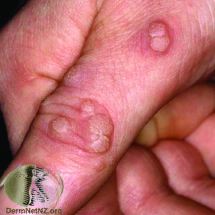
Warts are caused by a virus called Human Papillomavirus. They are contagious. Kids catch them by touching someone else’s wart, or by touching a surface that has come in contact with a wart. The virus prefers to invade through cuts, abrasions, and chewed bits of skin, so children are fertile ground for invasion.

There are about 130 strains of HPV. The type of wart you get depends on the strain and on where it appears.

Types of warts include:

  • Common warts. HPV types 2, 4 and 7, among others, cause the common wart. These warts can pop up anywhere, but they are most often seen on hands. “Periungal” warts are around the fingernails.
  • Plantar warts. Most commonly HPV 1, but can be caused by other strains ( 2, 3, 4, 27, 28, and 58) “Plantar” means on the sole of the foot, so that’s where you find plantar warts. They can be painful, because constant pressure on the sole of the foot forces them to grow inward rather than outward. They can feel like a pebble in a shoe.
  • Mosaic warts are a group of warts clustered together, usually on a foot.
  • Filiform warts. HPV strains 1, 2, 4, 27, and 29.These are rapidly growing long strings, frequently found on eyelids and noses. Luckily they are less common.
  • Flat warts. HPV 3, 10, 28 and 49. These warts are smaller, smooth, and more numerous. Kids will get between 20 and 100 separate warts all at once. They like to show up on the face.
  • Genital warts. There are lots of strains but the worst are 16 and 18, which cause cervical, skin, and anal cancers. This is the one we have a vaccine to prevent, given at age 11 or 12.

There are many therapies for warts, and many interesting traditional remedies. None of them work terribly well. My favorite dermatologist once said, “treating warts is treating a non-disease with a series of treatment failures.” Left alone, warts will resolve on their own, so doing nothing is probably the best option. Duct tape and rubbing with  potatoes are absolutely safe to try.

There are medical treatment options if the warts are driving you nuts. (check out the American Academy of Dermatology)

  • Chemical peels. Paint the wart with an acid every day after a good soak. Then abrade off the top layer of the wart with an emery board or pumice stone. (Don’t use the board or stone for anything else). You can buy salicylic acid over the counter, or a doctor can prescribe a stronger version. Some docs will also use tretinoin or glycolic acid, especially for flat warts.
  • Cryotherapy, or freezing.We use liquid nitrogen to form a burn blister under the wart, so that the wart will die and scab off. This frequently requires repeated treatments every two weeks or so.
  • Imiquimod (Aldara cream). This is a cream that encourages your body to make interferon, a part of your immune system that will fight off the virus.
  • Canthariden. This is a poison made from beetles injected into the wart–not FDA approved.
  • Electrosurgery and Curettage. Fancy words for burning it then scraping it off. Ouch.
  • Excision. Cutting it out.
  • Lasers (usually a pulse dye laser) and Infrared Coagulators. Painful and can leave a scar, both to your skin and your bank account.
  • Bleomycin. This is a cancer chemotherapy drug injected into the wart. Not ideal, as it is very painful and can cause you to lose pieces of fingernails, or fingers. Just say no.
  • DPCP, or diphencyprone. This is a potent contact allergen. The idea is that when your body reacts to the allergen it will attack the wart. Side effects include itching, welts, and blistering. Did I mention that common warts don’t have any side effects?
  • Cidofovir. The new thing, in trials now. It is an antiviral that actually kills off the virus with minimal side effects. Very cool, but still in the future.

So, all in all, my favorite wart therapy is: do nothing. They will usually go away on their own. Exceptions are if the wart changes color, bleeds without good reason, becomes painful, or interferes with your child’s activities. It is also important to see a doc if your child has a weak immune system caused by AID’s or things like cancer chemotherapy.

So, to end, Mark Twain’s advice, via Tom Sawyer:

Put your hand into water collecting in the hollow of a tree stump at midnight and say: “Barley-corn, barley-corn, injun-meal shorts…Spunk-water, spunk-water, swaller these warts.” Then “walk away quick, eleven steps, with your eyes shut, and then turn around three times and walk home without speaking to anybody. Because if you speak the charm’s busted.”

DomesticatedMomster
The Blogger's Pit Stop

The Weird and Interesting Life of a Flu Virus

sick-kid-01The first description we have of the influenza virus was from Hippocrates (my hero!) 2400 years ago. He dealt with it every winter, endlessly, just as we do now. Nowadays it makes between 3 and 5 million people sick each year, and kills 250 to 500 thousand people annually. In the US we average 200 thousand hospitalizations and 36 thousand deaths yearly. Persistent, nasty little bugger.

Influenza gets its name from the Italian word for influence, because we initially thought it was caused by the influence of the stars, and later by the influence of the cold. Now we know better.

The influenza  virus is a tiny spherical particle, only 80-120 nanometers in size. It would take a million of them standing in a row to make a 1 centimeter line. Its core is made of 8 separate segments of RNA (we humans have DNA). This core is surrounded by protective proteins and an envelop with 2 types of “glycoproteins”–the famous Hs and Ns you hear about when people talk about which type of flu is causing problems each year: Hemagglutinins and Neuraminidases. NPR has a very cool video of the flu virus invading a cell. The “key” in the video is the hemagglutinin.

The Hemagglutinins (Hs) bind to target cells in your body and inject the virus particle into your cells. How contagious the flu is, what symptoms it gives you, and how sick it can make you depends on the Hs. An H that can bind to cells in your eyes, nose, and mouth is more contagious than one that can only bind to your throat. An H that can bind to a cell deep in your lung is much more serious than one that can only bind to a cell in your throat.

The Neuraminidases (Ns) release the progeny of that prolific particle from that cell so that the little critters can spread further through your body.

The Hs and Ns are the molecules our immune systems build antibodies against, whether we catch the flu or just get exposed to the dead virus in the annual vaccine. The Hs and Ns are also the targets for antiviral drugs. There are 16 different Hs and 9 different Ns. Humans are usually infected with H 1,2, or 3 and N 1 and 2.

There are three groups (genera) of flu viruses in the family Orthomyxoviridae. (I am a nerd–I love that word. Ortho-myxo-vir-i-dae. It would make a killer rap song.) The three groups are simply labeled A, B, and C. Nerds have no creativity. A, B, and C. Sad.

  • Flu A has the most serogroups (Hs and Ns), infects the most different animals, and is the most virulent. It also mutates 2-3 times faster than B. The critters it infects are mostly aquatic birds, but it can infect many other species. We frequently call the flu by which animal is its main host. Human, bird, and swine are the most common strains we humans catch.
  • Flu B has only one serogroup and is almost exclusive to humans. It tends to be less severe and less common. Since it only has one serogroup and mutates slowly, many people develop a degree of immunity to it.
  • Flu C is even less common and less severe.

Flu viruses enter cells so that they can make copies of themselves and spread. As they make those copies they sometimes make mistakes, creating mutations. They average one mistake per copy, so mutation is constant– what we call antigenic drift. That’s why we never get immune to Flu A–it changes every year.

What makes Flu unique: There is one really cool thing about the flu virus that makes it different from most viruses: its RNA is split into 8 segments. Most viruses have one long piece of RNA. This means that if your local pig catches 2 different strains of flu at the same time, these strains can trade segments. When that happens we get antigenic shifts– much larger changes for which people have no immunity. These larger shifts can create a pandemic, like the Spanish flu in 1918 that killed an estimated 21 million people. We average 3 pandemics each century. We worry a lot about pandemics.

So, those are the ABCs of the flu virus. If you crave something more useful, like what you can do about it, check out my post on colds and flu or info on fever.

Now wash those little hands with soap, keep them away from noses and mouths, break out the alcohol (not the drinkable kind) and bleach, and go get those flu shots! This year’s shot covers Flu A H1N1 and H3N2, and two strains of B.

DomesticatedMomster
The Blogger's Pit Stop