Parenting: Top Ten Transforming New Year’s Resolutions

storkHappy New Year! Time for those resolutions. This year, instead of resolving to lose that last ten pounds or eat more veggies (although I will applaud you if you do), resolve to do the best job at parenting. The reward is so much bigger than going down a clothing size! So, my Top 10 Amazing New Year’s Parenting Resolutions:

I will henceforth…

10. Require chores. Equal participation is fundamental to receive the reward of being in a family. The pride your child feels serving the carrots he helped peel is well worth the time it takes to get him to do it. Every member of the family contributes, to the best of their ability. Family bonds and trust will form over the raking of leaves.

9.   Make rules, and enforce them consistently. Rules keep kids safe, teach them right from wrong, and civilize them. Make sure your child understands the rules, and every single adult in his life needs to enforce every rule each and every time, the first time it is broken. No “warnings,” because you made sure ahead of time that they understood the rule. Decide what the consequence will be for a broken rule long before you need to do it; make the punishment appropriate for the crime (timeout? loss of the toy? paying for the damage?).

8.   Feed my munchkin a healthy diet: whole foods that look like they either grew out of the ground or walked on it (I know, but not everyone is a vegetarian). Teach your children to eat when they’re hungry, and stop eating when they’re not hungry anymore. Aim for about half fruits and vegies and about half protein (meat, eggs, cheese, beans or nuts) and starch (potatoes, bread, pasta, corn). Everything else will be easier if they are well nourished.

7.   Keep a regular sleep schedule – both enough hours and at about the same time every day – as much as possible. Kids who are short on sleep are irritable, tired and have no attention span. Everything else will be easier if he or she has had enough sleep.

6.   Keep them safe when I can. There are lots of surprises out there to keep life interesting; there is no need to risk the preventable injuries. Use those seat belts and bike helmets, lock up the household poisons, guns and Grandma’s meds, and get those vaccines.

5.   Teach financial responsibility. Spend less than you make, stay out of debt, and save for the future. Do it where they can see you and explain what you are doing. Go through your budget with them in an age appropriate way, and feel free to say, “We can’t afford that.” Give them an allowance for those chores and require that they save some.

4.   Not wear blinders. Your primary job is to protect this child, even if it is sometimes from themselves. Children will lie, take things that are not theirs, and sneak out at night when they are 14. You need to catch them so that they learn that it doesn’t work. If they get caught stealing at 7, they have an embarrassing memory of having to go back and pay for what they took. If they get caught at 25, they land in jail and loose their job, partner, and children.

3.   Give them love without condition the child you have, not the one you dreamed they would be. Love is not a prize you can give when your child is good, and take away when they do not live up to your expectations. Without the absolute faith that no matter what happens or what horrible thing they do you will still love them, the foundation on which they build their life will by shaky and unstable. You chose to have them; unconditional love was part of the deal.

2.   Nurture my child’s unique talents and abilities; don’t try to fit the ones you want them to have on their unsuitable frame. This little person is an original – why would you want to shove him or her into a standard form? And what irreplaceable gifts would be forever lost because you did not value them? Respect the exceptional person that he or she is.

1.   Inspire them with myown life. Be what you hope for them. Find work you love, maintain a healthy relationship with your partner, eat a healthy diet, and exercise. Learn something new every day. Never lie. Give respect, and demand it for yourself. Keep an open mind, explore the world and grab opportunities when they happen by. Make your children proud.

Top Ten Holiday Poisonings

Cute kid girl in glasses thinking about gift on Christmas holiday. Vintage portrait

or, “how to avoid visiting the Doc during the Holidays”:

  1. Tiny magnets: These aren’t really poisonous but they can get stuck in noses and ears, choked on or swallowed. Keep track of the big kid’s toys so I don’t have to make the little one cry digging something out of his or her ear. Worse, magnets that are choked on or swallowed can require surgery to remove. Two magnets in the gut will stick to each other and wear through the bowel wall.
  2. Button batteries: Same problems as above, plus they can leak and cause burns, eating holes through the bowel that can be fatal.
  3. Grandma’s meds: These are on countertop at her home, and sitting in her unattended purse when she is visiting yours. This is the most common poisoning that I see. Other people’s meds also count, of course.
  4. Household poisons: Both the usual suspects (cleaning products, bug sprays) and the holiday specific (liquid fuels) are more available and less monitored in the holiday craziness. Lock ’em up.
  5. Food: Avoid potato salad that was made on the counter where they just cleaned the chicken. Return leftover food to the refrigrerator quickly. Wash those hands! Pick up and throw out unfinished drinks–kids can drop their blood sugar and fall into a coma with a relatively small amount of alcohol. Throw away cigarette butts, because kids eat them and the poisons in cigarettes can actually throw small people into a seizure. (And we inhale these things on purpose. Blech.) Add e-cigarette refills to this list for the last couple of years. 1/2 tsp can kill a child.
  6. Decorations: It’s actually pretty hard to poison anybody with holiday décor. Antique items will sometimes have lead, so don’t let the little guy eat the metalics. Don’t breath in the spray snow, because it has either acetone or methylene chloride in it. And don’t hit Uncle Joe with that branch, no matter how tempting….
  7. Plants: Poinsettias are not poisonous. Promise. Neither is Christmas cactus. Holly berries, mistletoe berries and peace lily berries are, as are bittersweet and boxwood.
  8. Smoke and carbon monoxide: Very poisonous. Live trees and decorations can be dry and fires, candles and space heaters abound. Keep your eyes open and your smoke and carbon monoxide detector batteries fresh.
  9. Mind numbing toys: Boycott toys that don’t engage your children’s minds. Look for toys that they can create with, explore with, or build with. I know this is not strictly a poison, but it’s my list, so I can bend the rules. So,…
  10. Poisonous soul numbing holiday insanity: Back up and take a breath before you spend money you don’t have on stuff you don’t need. Defeat stress and exhaustion with a healthy diet, exercise and regular sleep. Celebrate your heritage, enjoy your family and friends and create joyful memories. Ditch the rest.

Just a Cold? Or is it the Flu?

sick kid-01Any given year, between 5% and 20% of the US population will catch the flu.

Influenza, or the flu, is a virus spread in tiny drops of fluid that an infected person has sneezed or coughed out. Your children can inhale these, or rub droplets contacted from surfaces–or other people–onto their eyes, nose, or mouth. After a 1-4 day incubation period, your child becomes sick.

The initial symptoms of flu include a sudden, high spiking fever, chills, headache, tiredness, and body aches. From there it progresses through sore throat and congestion. Symptoms generally last about ten days, with the worst occurring during the first three days.

Children can be sick for longer than adults, and have more complications.

Complications of the flu commonly include things like pneumonia, ear infections, and sinusitis. Less common complications include fever seizures, encephalopathy, inflammation of the heart, and death.

Serious complications are more common in children with underlying health conditions, but even healthy children can become severely ill. During the 2014-2015 season, more than 145 children died, and more than 200,000 kids were hospitalized with flu complications. Generally about 43% of hospitalized kids have no predisposing health problems.

Children at the highest risk are those with underlying conditions like asthma, a compromised immune system (cancer, HIV/AIDS…), or with chronic diseases (diabetes, seizures…) Also at risk are babies under six months of age, who are not yet old enough to get the vaccine and whose immune systems are not yet adult sized.

We try to make sure high risk kids get their vaccines if they can, but we rely on other people to also get their vaccines to “cocoon” these kids so that they are not exposed. If parents, chid care providers, and the other kids in daycare get their flu shots, then chances are that the cute little baby with heart disease will not catch the flu.

Vaccines rule. Preventing disease is always better and safer than trying to treat it once a child is sick.

Flu vaccines come in two types–shot and inhaled mist. The shot is a dead virus, the inhaled mist is a live attenuated (very weak) virus. Neither can give you the flu or make your child autistic. Since we give the vaccine in the midst of cold and flu season, some people are bound to become ill in the weeks after they get it. It is easy to blame the vaccine. The shot can make your arm red and sore; the mist, since it is live, can give you a mild stuffy nose and a low grade fever. So much better than what the actual flu can do!

Last, what should you do if your child does catch the flu? If he or she has any underlying health conditions or is under two years old, call your doc. We have antiviral meds that, while they taste horrible and are not completely effective, do help.

Then, just like when they have a cold, make them rest, push any sort of fluid they will drink, and treat the symptoms. Ibuprofen will generally work better for the body aches and headaches than acetaminophen. Salt water drops or sprays work for stuffy noses, and for kids over four, cold and cough medicines will help them feel better.

Keep them home, because they are contagious. Adults are contagious for about 5-7 days; kids can be contagious for more than 10 days. Both can be contagious about a day before they have any signs of illness.

Call your doc if your child has any breathing problems, lethargy, fever that persists for more than three days, or isn’t starting to get better after the first few days. Or just if you want to. That’s what we’re here for.


How to Survive and Have a Joyous Holiday

Cute Kid Girl In Glasses Thinking About Gift On Christmas Holida

My daughter the anthropologist tells me that celebrations solidify relationships between people within a community, give them hope for the future, and serve as rights of passage.

With the holidays approaching, give thought to what you want this special season to mean to your children throughout their lives.

Keep that firmly in mind when you enter into the fray.

Want them to be involved in your community with its rich heritage and history? Emphasize that. Tell stories, act out events and celebrate your history. Help out people who are less fortunate.

Want holidays to strengthen family bonds? Put family first. Limit the decorating and shopping and work events, and hang out at home. Make gifts for each other, bake cookies and play games.

If you want holidays to be about joy, be joyful. Foster realistic expectations, appreciation for what they have and genuine values. Develop traditions that are more about time together as a family and less about how much stuff they get. The memories they keep forever will be the little things: sharing a bowl of popcorn while watching an old movie; reading a book while Mom or Dad runs fingers through their hair. Few people remember what they received for Christmas last year. They do remember that walk on Christmas Eve admiring the sparkling lights, tasting cookies straight out of the oven, and the look on Grandpa’s face when he got that homemade penholder.

Gifts

It’s tempting to get your children all the things they want for the holiday just to see them smile, but where do you go from there? Maniacal happiness is not joy. It cannot be sustained over time. Add to that that you have created unrealistic expectations for all the other holidays in their future. And the storage needs!

Restrain yourself. If holidays are about family time, board games, and baking cookies it is possible for holidays later in life to be happy. If holidays are about how much money was spent and how many new toys they received, how can real life ever work out? Bigger and better toys every year? That was not the goal.

If you can afford it, get them one or two of the things on their lists. Make them the ones they can create with, the ones that make them use their brains and bodies and talent. Add on some little things that are fun to open. Let little ones play with the boxes and bubble wrap. Then focus the day on family and love.

The Insanity

Don’t let holidays overwhelm you. There are so many expectations that no one can possibly meet them all and have any joy left. There are special foods that need to be prepared, special clothes that need to be bought, decorations, gifts, traditions to be followed, parties, travel, family… eeek! Weed out the excess so there is room left for joy, relaxation and rejoicing in whatever you were celebrating.

Before you decide to spend money on gifts or travel, be realistic about what you can afford. What did you get for your last birthday? Don’t remember? No one does. What people do remember is the conversation, the hugs and the warmth. Those are free. Take dollars out of the experience as much as possible and you won’t end up with a credit card bill for a present that was discarded six months ago. Don’t try to keep up with the people who have that bill and you won’t be laying awake at night and fighting with your spouse instead of relaxing snuggled up with hot chocolate.

Tune down the stress. Not spending more than you can afford will eliminate a huge amount of stress. Next, stop worrying about what other people think; they’re too busy worrying about what you think to care anyway. Keep to routines as much as possible. Sit down for meals; take some time to focus on each other. Step back from the hysteria and think about whether your progeny will actually play with that new doll or just stuff it in a corner, and whether you really need to travel or attend all the parties. Take some quiet time and relax. The world will not collapse if you skip a party or miss the line for the “it” gift. It will collapse if your child is so exhausted and stressed that he or she has a melt down.

                                                                       Health

Keep healthy. The week after a holiday is always busy at my office. I make lots of money from airplanes crowded with sick people and stores packed with germy carts. Get enough rest, and hydrate. Use hand sanitizer. Eat as healthfully as possible–avoid fast foods, throw in some fruits and vegies. Hide the caffeine and limit alcohol. Get a flu shot. Nothing can destroy a holiday quicker than a trip to the ER.

Avoid injuries. Most holiday injuries have nothing to do with the particular holiday, but everything to do with people being so busy that they are not as watchful as usual. Sports are more dangerous when we want to impress cousins. Teenagers tend to get more reckless during a celebration, and young children sneak away quickly. Most holiday injuries are from everyday activities and household objects made dangerous by the holiday craziness.

Chokings and poisonings are popular. The one I see most is an overdose on Grandma’s meds. At Grandma’s home they are left on countertops; at your home they are in her purse. A left over drink is a common way to poison children. A little alcohol can drop a child’s blood sugar and throw him or her into a coma.

Toddlers will put anything in their mouths. Unfortunately this means that everybody needs to pick up their stuff. Items over 1¼ inch in diameter are generally safe. Smaller items than that can go straight into their gut or lung. The most dangerous items to swallow are batteries and magnets; the most dangerous to choke on are grape sized (older children’s toys, hard candy) or stretchy (balloons, plastic bags, marshmallows). Clean up!

Holidays also provide a banquet of things to irritate children’s allergies. Live trees indoors, foods, cigarette smoke, wood fires and other people’s homes and pets come to mind. Avoid them if your child has allergies.

Fires and electrical injuries are especially common during holidays. Decorations can be flammable, old Christmas trees will be dry, and space heaters, candles and fires are commonly nearby. Frayed and loose wires easily start fires. Keep your eyes open for dangers.

Use your common sense during celebrations. If it doesn’t seem safe, don’t let people pressure you into it. Feel free to let watching your kids take precedence over seeing Uncle Joe’s trophy or Aunt Mary’s vacation photos. “He’ll be fine” doesn’t make him fine. Keep an eye on him, or her.

Feel free to be rude and head for home when the kids get tired, if a situation feels out of control, or if your child is being exposed to something you aren’t happy with. Use the munchkin’s youth or fatigue as the excuse for you to head home, relax and read a bedtime story.

Remember that the point of celebrations is to solidify relationships and give hope for the future. Get there by focusing on your history, rejoicing in your present and not sabotaging your future. Don’t go crazy with gifts: they don’t teach your children anything you want them to learn and the financial stress will eat away at that joy and hope you were dreaming of. Pick fewer things to do, and do them together. Be safe and stay healthy.

Top Ten Reasons to Never Lie to Children

A small boy playing

Every time I say, “Never lie to your kids,” someone responds with, “What about Santa, and the Easter Bunny? What about playing pretend?” I sometimes think people like to stir things up, and create difficulties where there are none.

Lies and fantasy are not the same thing, and we know that when we are not trying to be obtuse. Lies are ugly. Lies are self-serving, meant to gain an advantage for the liar. Lies hurt, and cause damage and resentment. Everyone has, at some point in their lives, been hurt by a lie. Remember that feeling, because it is not something we wish for our progeny.

There is a real difference between lies and pretend. Pretend is a game everyone has agreed to play. No one was ever hurt by being brought into the club to help keep the secret of Santa.

The other side of the coin is that well meaning parents want to protect their kids from some of the less magical aspects of life, and lie in order to guard their child’s innocence and happiness. We forget that there is a price tag on the lie that will come due when it is found out. The result of “Sure we can afford that toy,” and “Grandma just went on a long trip,” is a lack of trust, and panic when Aunt Judy goes on her next trip.

The solution to this is simple. Don’t tell them things you don’t want them to know. Tell them they are too young, or you’ll have to think about that, or just “No.”

Don’t lie. Because…

  1. …you’ll get caught. You have to keep track of all of your lies; your munchkin only has to remember what you said. You are the most important person in their lives. They watch you and pay attention. They will notice.
  2. …you don’t want your child to lie to you, and fair is fair.
  3. …kids incorporate anything a parent does into their own self image. If their parent is a liar, then so must they be.
  4. …they need to trust you on matters of safety. If you have never lied to them they will know you are telling the truth when you say, “drugs are dangerous,” or “random sex will hurt you.”
  5. …kids thrive when they feel secure. They need to know they can count on their parents, and have a safe base from which to launch their lives. Lies will erode that security.
  6. …it is much easier to have self respect, and take pride one’s accomplishments, when one has honestly accomplished them. As you go, so will they follow.
  7. …you want your children to succeed in both their work and their relationships; a habit of honesty will help in both.
  8. …the respect of your children must be earned, not granted as an automatic part of being a parent. Lying tarnishes that respect.
  9. …when they see you deserving of and expecting respect as an honest, trustworthy person, so will they demand respect in their own lives and relationships.
  10. …last, they can trust that they are wonderful and capable of anything, because you told them so, and you never lie.

Why is Being Short a Bad Thing?

Sad child on black background. Portrait depression girlThe time has come to question our assumptions.

We know that humans come in all sizes, shapes, colors, talents, and smarts. Things would get pretty boring–and confusing–if everyone looked alike and had the same talents and abilities; we need variety to keep the world turning. Who would grow the food and fix the plumbing if we were all rock stars?

Why then do we then pick one or two sorts of humans and define them as good? Why is tall better than short? Why is blond better than brunette? Why is aggressive good in a male and not so good in a female? Who makes these arbitrary decisions?

We need to take a breath and examine our assumptions, because they effect every aspect of our lives. We especially need to consider how they affect our children’s lives.

Thoughtless, arbitrary assumptions can place expectations on our children that will crush their fragile frames.

It is easy to assume that athleticism is good, and slide from there over to I want you to be athletic, and will be disappointed in you if you are not. It is common to assume that girls should be nice, and then wear a dismayed look when a daughter’s competitive streak comes to the fore.

It is equally easy for a daughter to internalize that look of disappointment or dismay, and lacerate her own self-esteem.

So let’s question our assumptions.

I am where I am partly because I was fueled by soul deep anger and competitiveness. I am told these traits are “negative” in a woman, but they motivated me and gave me the power to overcome endless obstacles. Why then are such things defined as negative – should it not depend on how they are used? These traits are part of my whole–should I not embrace them if I am to love myself? Or do I have to embrace only the parts of me of which others would approve, and try to bury the rest? Why? Because society says so? Religion? Because I am a woman and we are assumed to be a certain way? Because they are not happy, perky feelings?

Who defines what is a negative trait, and what is positive? Is it social mores, extended family, religious books, the entertainment industry? These entities don’t even know you or your children, so why should you trust them to decide what you or they should be?

We want our children to like themselves in their entirety, not just selective bits and pieces. We do not want them to feel that they need to hide parts of themselves because they believe those parts to be bad, or shameful. Down that path lies broken relationships and depression.

If your child is short, tall, brunette, round, skinny, bookish, hates books… take this moment to make sure that you are not harboring assumptions about which bits and pieces are “good” and which are “bad.” Kids are experts at reading their parents, and stamping themselves with those unvoiced judgements. Value honesty, responsibility, inspiration–traits that will help them succeed in any field–and all the parts and pieces of your actual children, because every part of them deserves your acceptance and love.

Domesticated Momster

All the Right Foods

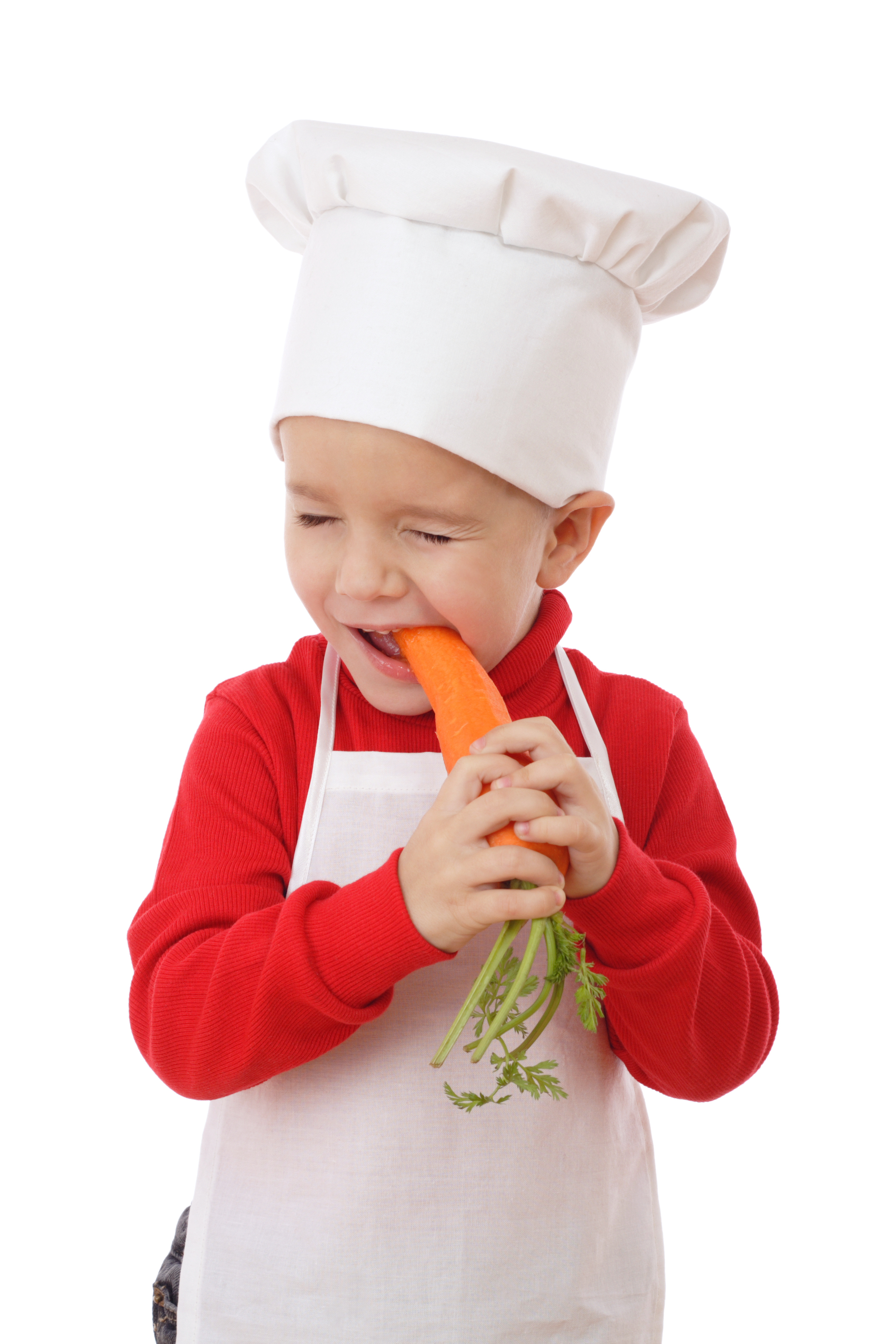
Little chief-cook tasting the carrot isolated on white

One of my favorite teachers once said “Never fight a battle with a child that you cannot win.” Excellent, timeless advice.

Luckily, children are young and inexperienced. We adults are old and treacherous–we can outsmart them.

This is particularly good advice when it comes to nourishing a child. The grown ups need to win food battles, because the losing side is populated with joint pain, back pain, heart disease, stroke and death. We have to set up this battle so that we cannot lose, because otherwise our child will suffer.

There are two keys to making this work.

The first is that children do not cry for what they don’t know exists. A three year old who doesn’t know about chicken nuggets and French fries does not beg for them. If it’s not too late, start on day one and keep only healthy food in the house, in the proportions you want them to consume. Eat at home. Then let them have it. Everything in the house is good for them, so you never have any arguments over what your urchins can or cannot eat. If they munch on healthy snacks throughout the day, like whole grain crackers with cheese or pieces of fruit or veggies, it really doesn’t matter if they eat formal meals.  There is no need to argue over what they need to eat before they leave the table.

If it is too late and they already have some bad habits, explain to them that you’re turning over a new leaf, eating healthier, and throwing out all the junk. Then do it, and put in earplugs. It gets better in about two weeks if you are consistent and don’t give in.

The second key is that “never” is a lot easier for a child to deal with than “sometimes.” “Never” is a shake of the head, a smile, and a change of subject. “Sometimes” is endless daily arguments over what they want today because sometimes they get it, sometimes you buy it, sometimes it’s O.K. It’s easier for the child as well: children are less stressed and develop healthier habits when they can eat when they’re hungry, eat whatever is available, and stop eating when they’re not hungry.

So what edibles do you bring into the house? Start with whole foods: things that look like they grew out of the ground or lived on it. Shop mostly around the outside of the grocery store where they keep the produce, meats, and dairy. Avoid the aisles unless there is something specific on them that you need. Don’t buy anything with ingredients that you can’t pronounce without a chemistry degree, and don’t buy sodas.

Make a meal plan for the week, taking into account what is in season, what you like to eat, and what your week is going to be like. Make meals ahead that you can reheat or reinvent later in the week when you have a crazy busy night. Throw together an extra pan of lasagna, bake a larger chicken than you need so you can make quick quesadillas, or save some leftovers for a shepherd’s pie. Plan ahead so you won’t be tempted by the drive through.

About 2/3 of everything children eat should be fruits, veggies and whole or enriched grains. This leaves only about 1/3 for proteins (meat, eggs, cheese, beans, and nuts) and starches (potatoes, bread, corn). That translates to a maximum of about 6 ounces per day of protein containing foods for a medium sized child, and 6 ounces of starch. Visually this is a portion about the size of a deck of cards, much less than the average child eats. This leaves lots of room in their stomachs for fruits, vegetables, and whole grains.

Children don’t overeat on a diet that is mostly fruits and veggies, which means you don’t have to chase them around trying to limit how much they eat so that they won’t get chubby. Feel free to let them have seconds, thirds and fourths on the broccoli and carrots, but sorry kid, that’s all the meat and potatoes we made.

Arrange the battlefield ahead of time in such a way that you have no chance of losing–you don’t even actually need to fight–so that your child will grow up healthy, nourished and strong, with good lifelong habits. Do this consistently and everyone’s lives will be less stressful. Your children will know that food is nourishment of the body, not an emotional crutch for the soul.

Below is a chart that should give you an idea of what the goals are for your child’s diet, based on their sex, age, and activity level:

diet table2

Happy Haunting! How to Stay Safe on Halloween…

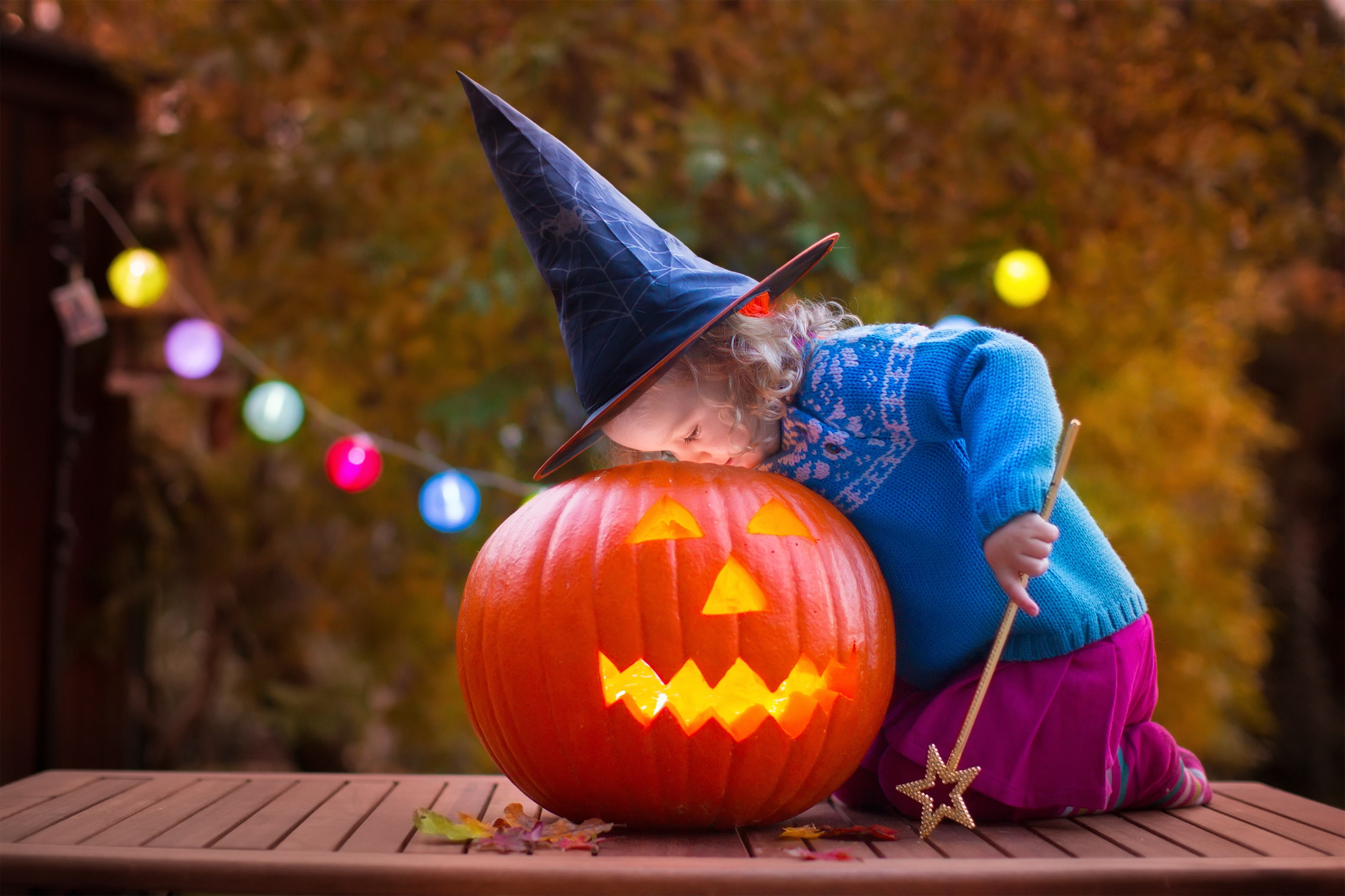
Little girl and boy carving pumpkin at Halloween. Dressed up children trick or treating. Kids trick or treat. Child in witch costume playing in autumn park. Toddler kid with jack-o-lantern.

Time again for the annual “How to keep your kid alive and still have a happy Halloween” article. I know you’ve read this sort of thing before, but skim through – you might see something you forgot!

First, costumes. From tiny ones that want to be lions to preteens dripping blood, costumes are the best part of Halloween. For a few hours we suspend boring reality and play at being something else. How better to encourage creativity and imagination?

Please try for bright, easy to see colors. Check to make sure the fabric is flame retardant and add reflective tape. Make sure the costume fits well so your little guy won’t trip. Stick your little girl’s feet into comfortable shoes. Pin a paper with their name, address and phone number inside their pockets in case you get separated.

Paint their faces so they don’t need to wear masks that can obstruct their vision.

Be careful about those accessories! Long scythes and pitchforks can be trip hazards. Accessories should be soft, short, fake and flexible. Guns that look real have caused problems when people were unsure they were toys. Arm them with a flashlight with fresh batteries instead.

On the subject of home décor: I once put a big fat candle on a table decorated with straw. It took my next-door neighbor–a fireman–raising his brow for me to see that this was not a terribly bright idea. So. Be careful where you put flame. Fire inside a floor level pumpkin with costumes sweeping by–not so good. Try battery powered candles or glow sticks instead. The fireman will appreciate it.

Only the grown ups get to use sharp objects, so pumpkin carving is for big people only. Nothing ruins a holiday like a trip to the ER. Kids can design with markers or paint.

Next, inspect your yard and home for trip hazards such as bikes and hoses. Check for frayed wires, and poorly lit areas.

There are, I admit, children who may disagree with me about costumes being the best part of Halloween. There is that other thing they like a lot: running around neighborhoods screaming maniacally and getting free candy. I would frown upon such activity but I have fond memories of doing the same.

So, on the subject of trick-or-treating: the number one way children are hurt on Halloween is by running in front of cars in the excitement of the moment. Teach them basic safety and know where your kids are and who they are with.

Kids under 12 walk with a grown-up (No, that is not up for debate; blame it on me.) Over 12, it depends on the maturity of the child and the safety of the neighborhood. If they are not with a grown-up, they need to travel in a group, on a preplanned path. If you can find a neighborhood where they close off the streets, enjoy! If not, hike through a familiar neighborhood (it can’t hurt to check the registered sex offender site and avoid those houses).

Everyone needs to stay in well-lit areas, avoiding short cuts, alleys and darkness. Use sidewalks and walk facing traffic. Be careful when crossing the street: even if the approaching car does see your child, the one behind him or her might not. Make sure they know to never approach parked cars and never enter a house. Have your big kid carry a cell phone and check in every hour. Agree on a curfew.

When they get home, go through their haul. Throw out anything that looks like it was tampered with, anything home made (if you don’t know the maker), choking hazards, and whatever else you can get away with. Freeze some for holiday cookies later.

Last, take care to keep your pets safe during the holiday. Keep chocolate and anything sweetened with xylitol away from your dog. Watch for choking hazards and yummy electric wires, and lock your four legged ones away from the front door so they won’t escape when the hoodlums knock.

Happy Haunting!

Your Kid’s Brain on No Sleep

Tired Teenager With TabletEvery animal sleeps. Birds sleep attached to their branches, bats sleep upside down, whales sleep half their brains at a time–all of us need to catch some Z’s. Science doesn’t have a complete understanding of why we sleep, but we do have some ideas and we know people run into problems if they do not get enough.

Humans sleep in cycles from light sleep into heavy and then into dreams. Adults cycle about four times per night; infants cycle about every hour (that’s why they can wake up every hour). Each stage has a function: if you don’t get enough time in each stage you will not feel rested, even if you spent enough hours horizontal.

During the first stage, or “N1”, you are in drowsy sleep. You are not completely out, but neither are you completely aware of your environment. If someone sat beside you to read a book you would not notice; if that person said your name you would.

During N2 you loose all conscious awareness; N3 brings you into deep sleep.

Rapid eye movement (REM) sleep is the fourth stage. During REM sleep you dream, and your voluntary muscles become atonic, or mostly paralyzed, so you don’t whack yourself in the head.

Then you cycle through the phases again. Most deep sleep is early in the night; most REM sleep is later toward morning. (That’s why kids mostly wet the bed early in the night.)

If you get enough sleep you feel energetic during the day, your brain works and your emotions are under control.

The opposite happens if you, or your children, are sleep deprived. If your children do not get enough sleep they are tired, they cannot concentrate and they can be irritable.

Lack of sleep affects their working memory: the memory they employ constantly to reason and function. Without an effective working memory they will find it harder to make decisions. It will be difficult to focus and learn.

Sleep is necessary to organize, consolidate and solidify what your children have learned during the day, so it can be there the next day when they need it. There is even some evidence that REM sleep is necessary for your child’s brain to develop properly in the first place.

Many of these symptoms duplicate those of ADD, depression, and Oppositional Disorder. Sleep deprivation also affects the function of your immune system, your ability to heal, your growth hormone levels and your ability to lose weight–important stuff.

So how do you know if your children are getting enough sleep? Look at them during the day. If they are sleeping adequately they will wake up easily, perhaps without an alarm. They will be awake during the day, not sleepy, not dosing off when they are still. They will be less irritable. They will be able to concentrate, focus and learn.

If they are not getting enough sleep, getting more is a priority. Make sure there is enough time allotted in their busy schedules, and try to make bedtime the time of day that they are actually sleepy. Every person has a circadian rhythm that includes a time in the evening when they get drowsy. That time should be bedtime. It should be approximately the same every day, to avoid permanent jet lag.

During the day make sure they eat healthy whole foods. No caffeine please, no tobacco exposure (yes I mean you!) and watch that sugar intake. Also, they need at least twenty minutes of aerobic exercise every day to wash those stress chemicals out of their bodies.

Quiet things down about two hours before bedtime: no TV, no vigorous exercise. Turn on some quiet music, play a board game, or read a book. Lower the light level. Give your youngster a warm bath and read a bedtime story. Don’t even think of having a TV in the bedroom! Make their bedroom comfortable, quiet and a little cool.

Enough sleep is essential if you want a child who is not moody and has a functioning brain and energized body. If you are thinking your munchkin has a behavioral problem like ADD, Oppositional Defiant Disorder or depression, consider first whether he or she is getting enough sleep. If not, change what you need to to ensure that they do. Get that TV out of the bedroom, give them a healthy diet and enough exercise, and don’t expose him to cigarettes. Quiet things down two hours before bed. And get some sleep.

Domesticated Momster

The Egg Came First, Of Course!

Family remodeling house. Home remodel and renovation. Kids painting walls with colorful brush and roller. Children paint wall. Choice of bright color on sample palette for child nursery or kid room.

So, I’ll admit it. I truly do not understand that whole man/woman inequality thing. I don’t get why it exists. It’s like the chicken and the egg to me, which came first? It’s obvious: the egg. Something that was almost a chicken laid an egg that had a new mutation, and voila–a chicken! So simple, just a matter of definition, of where we draw that line.

Why is it not just as obvious to everyone that men and women are equal? Each has 46 chromosomes and the same arrangement of muscles and bones. Both have a brain, a heart, two arms, two legs.

How could a lesser being get together with a greater being and create a child? Part of two equals have to make that whole.

And yet we endlessly insist that they are not equal. We focus on what differences we can find and weigh them on an scale created from self interest, history and desire. Men are bigger, stronger, and have more muscle, so they are better! Women can bear life, so they are better!

We write off young women because they are girls, and sexy, and we judge them on that; we ignore old women because they are old, not sexy, and are thus useless. We walk on, satisfied with our actions because we have put them in their slot; it is settled. Women are less, because sex defines them.  We must allow them to be defined by their sex or they pose a threat to the status quo. She can’t be president, she might push the button when she has PMS!

Whole human beings are reduced to their sexuality because it orders the world and makes it easier to find and understand our place.

In the same way young men are written off when they are not big, athletic; old men are written off when they do not have money, a fancy car. If they do not conform, they must be derided, snickered at, because of society’s obsession with macho manliness and wealth.

These prejudices do none of us any good. If we win and convince ourselves that we are better than one person, the flip side is that we will be judged as less than someone else. Do we really want that?

At some point, if this is ever to improve and we are not to endlessly churn out damaged adults with sad relationships who in turn damage their children, we have to evolve to the point where we know, to the depths of our souls, that all humans are equally valuable. All talents are to be prized. All life is sacred.

We all want the same things in life: to love and be loved, to have a safe haven to go home to, to have work that inspires us. We have so much about us that is the same, yet we constantly focus on our differences.

Where does this need to compare and compete, to constantly evaluate and judge, come from? Is it hard wired into our animal DNA, or is it something our human brains can overcome?

Why do we need to write anyone off or judge ourselves against others? Why do we subject ourselves, let alone total strangers, to valuation by our obsessions and insecurities? One part of a person is not the whole; the one hue we individually consider important cannot stamp a whole human being with a value, like a price tag, ignoring the rest of the color spectrum.

It is time that we embrace the whole of the human spectrum, and take joy in our evolution. Each person–man/woman, tall/short, intelligent/talented/mechanical/weird–has equal value, is deserving of equal respect, and can be loved and appreciated as they are.

Why live a life that has already been lived, outlined by the generations who lived before? Grasp change; reach deep into your own unique soul and create something new. Then allow your neighbor, workmate, and child to do the same.